I wanted to say a few words in light of the past 3 weeks. I was in a serious car accident and broke my back and wrist. At first I was incredibly worried about lifelong low back pain as this is a common mechanism for chronic problems. However, now I am grateful to be alive and walking. Had any of the factors been different, I could be much more badly hurt. As is, I can walk, the pain is lessening every day, and I have the assurances right now that I will return to many of the activities I love like running, swimming, and hiking. I'm optimistic about backpacking and climbing as well.
But I haven't touched social media yet. I don't know what to say. How I couldn't even stand I was in so much pain, or how I literally couldn't walk without a walker for 2-3 days. I couldn't wipe myself. My life revolved around 3 hour increments between pain meds. I cried in my pajamas at 10am on a tuesday trying to crack an egg. I have considered each action I do for the last 3 weeks and how to ergonomically perform it and if it will hurt.
Now that we are in 2019 I want to focus on what I can do. I will fiercely and bitterly fight with every ounce of strength I have to return to where I was. My goal is to not let these injuries limit or define who I am for the rest of my life. It also bothers me how so many people only use social media for the positive moments in their lives. I don't want to vomit too much personal information all over, but it's damaging to only see these one-sided portrayals of life. I haven't posted anything, because I don't know what to say. We all need to each and every day how incredibly fortunate we are. How important it is for everyone to have a safety buffer and how quickly everything can change.
There's a lot I don't know about how 2019 will go. But I know more than ever how loved I am and how amazing and compassionate my community is. My friends and family came together to help me in ways I will spend repaying for a long time. It's one thing to say you would do anything for someone: it's another thing to actually see that proven.
So 2019 will be better. I'm not the same person I was 3 weeks ago. Nothing will make it go back. But I am resilient and tough and what I can't do others will help with. I will get through this and in the end I will be okay.
Wednesday, January 2, 2019

Wednesday, December 12, 2018
2018 Book Reviews

Edited by: Elaine Steinbeck & Robert Wallsten
This anthology should not be read cover to cover. Steinbeck had plenty to say and was never shy or reserved about saying it. He maintained an impressively high level of correspondence and built time into each day for writing letters. His style changes as he does, succeeding professionally and riding a roller coaster of personal triumphs and disasters. He also frequently traveled, and insights about his numerous locations pepper his letters from those times. I enjoyed his book by leafing through and reading letters from various points, sometimes out of order, and following self-contained events in his life. My favorite letters were written when he reclused himself to a cottage by the sea and recovered from a failed relationship, slept with a bunch of women, then began corresponding with an attractive wife whom he eventually seduced away from her husband.
However, he may have said it best later in life in a letter to his son counseling him on falling in love.
"If it is right, it will happen - the main thing is not to hurry. Nothing good gets away."

By: Fredrik Backman
My team selected this book for book club and it was delightfully charming. Ove is the European version of the old man from Up: stubborn, recluse, prideful, but resolute in his moral convictions. Early in the book he begins a never ending conflict with a stray cat whom he eventually fails to drive away and dejectedly tends to. His past is shrouded in mystery which we uncover bit by bit as the book progresses. His neighbors wind up his unlikely lifesavers. The woman is loud, warm, and full of life and laughter and befriends Ove in what ultimately becomes a symbiotic relationship. I took fault with the end of the book which I won't spoil but which I don't think accurately honored the spirit of his wishes. But maybe that is what life is all about anyway: doing what is best for others. Five stars, definitely a book worth reading and excellent for discussion.

By: Erin Morgenstern
Utterly magic. This story transcended time, space, constrains of normal life and expectation and possibility. When you open the cover, you ascend into a world of limitless possibility, unnatural beauty and elegance, and pure magic. As with the best stories, an undefined conflict promising enormous sadness anchors the plot, but the main characters are not ordinary, so nor should their story. Vivid descriptions, intricate characters, and setting where anything is possible make this book compelling and hard to put down. I may have cried at the end, nobody can prove either way, but the ability of this book to engage every sense while remaining black words on white paper speaks to the skill of the author and the strength of her story.

By: James Hamblin
When your celebrity crush writes a book of course you have to read it. James Hamblin takes some of the most common health-related questions he gets asked and answers them in ways both obvious and circuitous. While some of his answers stray from the original question, it's his way of politely re-writing the assumptions behind the original question and giving context to the subject. He also loves to tell stories and his favorite way to begin an answer is wildly unrelated to the subject at all: drawing the reader in and gradually coming full-circle to the original topic. I learned a lot, both in obscure knowledge but also in where non-medical people's minds linger and puzzle. The first time a patient asks me a question answered in this book, I will happily recommend it and bless the man who took the time to research and publish the disconnect between ivory-towered medicine and every day human curiosity.

The Automatic Millionaire
By: David Bach
This guide to saving money smartly and efficiently was recommended to me by one of the hospitalists where I work. He is on track to retire before age 50, so I figured he must be well-informed. The book is full of cheesy personal anecdotes from the author which makes it read kind of like an infomercial, but once you drill down to the core message, his advice is strong. The book breaks down how to save money in easy, manageable chunks. In a world full of electronics, it is impressive, too, how writing a book on automating investing is so relevant. Most importantly, he helps you, the reader, identify why saving is so important and discover the motivation to make change. Even as a grad student with tens of thousands of dollars of debt right now, I still got excited about investing and managed to increase my retirement deduction. Find the time to read this book, and your financial stability will thank you.

The writer must believe
that what he is doing is the most important thing in the world. And he
must hold to this illusion even when he knows it is not true.
Read more at: https://www.brainyquote.com/quotes/john_steinbeck_114033
Read more at: https://www.brainyquote.com/quotes/john_steinbeck_114033
The writer must believe
that what he is doing is the most important thing in the world. And he
must hold to this illusion even when he knows it is not true.
Read more at: https://www.brainyquote.com/quotes/john_steinbeck_114033
Hidden FiguresRead more at: https://www.brainyquote.com/quotes/john_steinbeck_114033
By: Margot Lee Shetterly
This author begins her book early by telling the reader why this story is important to her. She has ties to these women on numerous levels, and was compelled by their humility and obsolescence to bring their untold accomplishments forward. She primarily follows Katherine Johnson, Dorothy Vaughan, and Mary Jackson, three African American computer scientists who helped win WWII and propel humankind to the moon. Their brilliance is impressive, but coupled by the racism and systemic oppression and contempt society placed upon them for simply being women, and being black, is monumental. The US government believed in these women at a time nobody else would, and their sacrifices and exceptional hard work paved the way for women of color to be acknowledged and respected in these fields. Over and over, their accomplishments were misattributed, minimized, or stonewalled, but as they were pushed against the glass ceiling, they never stopped pushing back. I found this book hugely inspiring and can't find basis to complain when women like these walked the earth and accomplished as much as they did in the same 24 hours a day we all are given.

By: Scott Kelly
In keeping with the theme of reading books about subjects I know nothing, Scott Kelly's year in space stood out to me on the library shelf, and I'm so glad I acted spontaneously. Another immensely inspiring figure, Scott Kelly paints the picture of his life leading up to this mission in the context of his year aboard ISS. He jumps between space and childhood for most of the book until the timeline catches up to his astronaut years where he focuses more on his earth time and less in space. The window he gives ordinary earth-bound humans into the immense pressure and precision of NASA's space missions is fascinating. I loved his descriptions of everything aboard the ISS, and his deadpan humor when you least expect it. The triumph of a truly international collaborative project is a breath of fresh air in a time when partisan and isolationist agendas are becoming the norm. Scott Kelly reminds us that NASA, and space exploration, is a shining example of what collaboration can accomplish, and how the biggest challenge, the reason he spent a year in space, remains for humankind to accept: putting a human on Mars.
Saturday, September 23, 2017
Summer 2017 Book Reviews

Boys in the Boat
By: Daniel James Brown
A classic sports tale regaling the 1932-1936 University of Washington men's rowing club and quest for Olympic gold. The story begins with Joe Rantz quest for education and a better life after being abandoned and abused on the Olympic penninsula. The author masterfully draws the reader in with vivid imagery, exciting action, and sympathy-inducing backstories. You root for the home team, knowing full well they will win, they must win, but following along each step of the way. The author builds suspense and draws the reader in with each rowing season, until the final, dramatic 1936 season. The last race is nothing short of epic, and you feel the significance of their task, the rippling magnitude of their performance, and the emotional roller coaster of preparation for the obsessive quest to be the very best. It's a Cinderella story in its purest form, a thrilling read, and a heart-warming story.
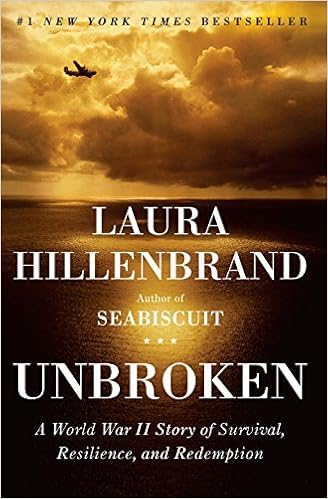
Unbroken
By: Laura Hillenbrand
Continuing on the vein of harrowing quests, Unbroken follows Louis Zamperini's unbelievable service in WWII, including his unfathomable airplane crash and Japanese imprisonment. The author paints stark, riveting images spanning years while never allowing the reader to lose interest or hope. Zamperini endured unspeakable torture during his service, drafted from the brink of being the first person in history to break the 4 minute mile. In a matter of months, his goal changes from shaving miliseconds off his mile time to surviving, unbroken. His story inspires and challenges the reader to examine her own drive and determination, drawing strength from his grit as we ponder the extreme measures his tormenters went through to break him. He seems almost super human at times in his fierce determination not to yield, but life eventually catches up to him and we glimpse the true effects of the horrors of the war. The book's ending is perhaps the most personifying aspect of his story: after gale-force storm of war and the still calm of it's end came the wreckage and aftermath, which he stumbles through and emerges a better, more sustainable man. Louis Zamperini was, in the truest sense, unbreakable.

The Stranger in the Woods
By: Michael Finkel
This book was very short, but I found myself stopping after each chapter to let the layered meanings sink in. For 23 years, a man lived in the North Woods in total solitude less than 2 minutes from civilization. The book begins with his discovery, and pieces together his life as the author searches for understanding, understanding of the man and his motive, and understanding of why society views his the way it does. The hermits direct quotes are my favorite part: he did not speak for 23 years except to say "Hi" once to a hiker who encountered him on a trail. His primary source of knowledge were books he stole, so his sentences are sparce and pregnant with meaning. It is unclear how much he intended, but very clear he doesn't care at all. He had no filter and no emotion for many of his interviews, and his sentence structure and choice of words are so foreign from the way we generally communicate. He begs the question why. His perspective on life and existence is so radical, and diametrically opposed to the rest of civilization, that one cannot help but rethink their own opinions on how to live. A fascinating story, though only 3-4 years old, already disappearing into the past like everything this man had built his life around. A bit haunting, never dull, a strong recommendation for everyone who wants to be challenged.

Unbound
By: Dean King
A fascinating glimpse into a little-known political maneuver with international implications which would reshape the face of history forever. I loved the emphasis on the women of the trip, but found the story excessively depressing. The long march is nothing more than brutal, and the author never lets you forget it. The political perspective was interesting, but there exists so little information on the individuals themselves that it was difficult to form attachments to the characters, or even sometimes keep them all straight. It hardly matters though, because so many of them end up dying.
Wednesday, April 12, 2017
Spring Book Reviews
Catching Homelessness
by: Josephine Ensign

Sometimes a Great Notion
by: Ken Kesey
 Full disclosure: This book was only on my radar because a boy I liked told me it was one of his favorites. This was one of the most enjoyable pieces of fiction I have read in years. The story centers around a family dynasty of loggers in costal Oregon named the Stampers. Kesey starts several generations back filling in the genealogy and history of this family and most of the town, gradually making his way westward to the current story. He weaves in rich side character stories who play pivotal or incidental parts in the book, so that when a main character walks into The Snag, Wakonda's local bar, you feel connected to each local just like the characters do. The climactic main conflict hinges around the Stampers logging industry vs the town's logging strike. Hank Stamper is the dictionary definition of stubborn, and unyieldingly refuses to support the strike, instead striving to fill the mill's request almost single-handedly, with the help of only a few loyal family members. His brother also returns from the East Coast during this pivotal time, partly to see his old home, mostly to avenge his mother and destroy his brother. This plot ebbs and flows, and Hank's beautiful wife seems to grace both conflicts. She remains a beautiful, Stamper-defying enigma throughout the story, supporting her husband physically while you always wish to know more about her hopes and dreams. The climax is thrilling, devastating, and senseless, and everything about the story mirrors the aftermath for the rest of the book. It is hard to pick a favorite part, but the author's absolute mastery of descriptive writing at times made me smile simply reading his descriptions. Scenes came to live in front of my eyes, painting themselves with the words he arranged with ease page after page. Definitely a book I will re-read, and a timeless classic. Some say this was Ken Kesey's magnum opus, and they wouldn't be wrong.
Dear Data
by: Giorgia Lupi& Stefanie Posavec
 This was kind of a fun book to peruse, and definitely would be a great coffee table conversation starter. These two graphic designers spend 52 weeks sending each other weekly postcards drawing data about their day-to-day lives. Each week, they pick a different topic, spend the week gathering data, and present it in novel, colorful ways from England and New York. The two women had only met once before deciding to do this, but their paths cross again several times during this year. They cover all sorts of topics: how often they swear, doors they pass through, places they've lived, and thoughts of jealousy, to name a few. Each woman has her own unique style preference - one thinks more linearly and with lots of symbols, and the other prefers simplistic, colorful presentation. I enjoyed appreciating their creative talent, and hopefully learned to think a little more outside the box.
Zig Zag: The Surprising Path to Greater Creativity
by: Keith Sawyer

This was also an impulse read, and part of my attempt to expand my thinking. I ended up outlining each chapter because, unlike many books with lofty promises, Sawyer rolled up his sleeves and got busy objectively summarizing research-proven ways to be more creative. He divides the creative process up into 8 parts, then breaks down each part into steps with tools to accomplish each objective. I learned a lot, and certainly gained more insight into my own strengths and shortcomings. My biggest takeaways were to not be afraid to think broadly and absurdly about problems, narrowing the scope only after approaching the problem from every conceivable angle and solution. Sometimes in healthcare we are encouraged to follow uniform, streamlined approaches which doesn't exactly leave much room for the creative process. Nevertheless, innovation is everywhere, and I have already found myself applying concepts learned in this book.
Extreme Measures: Finding a Better Path to the End of Life
by: Jessica Zitter
 Written by an ICU attending turned Palliative specialist, this book should be read far and wide. Dr. Zitter describes her change of heart while placing a central one day and being castigated by the Palliative ARNP in front of her med student. While initially angry and resistant, she examines her motives and realizes there is more to patient care than preserving life at all costs. She honestly discusses holes in the medical education system which focuses more on saving, and less on transitioning. Knowing when can be an incredibly emotionally difficult, ethically ambiguous decision to make, and Dr. Zitter provides excellent language and resources for starting difficult conversations and topics which should be covered. Her own hesitance to write her advanced health care directives really resonated with me, and I ended up writing me own shortly after finishing this book. She provides so much food for thought, and intersperses patient stories with thoughts and discussion points. She doesn't lecture, but rather discusses, and sometimes leaves stories and thoughts without answers. One of her great strengths is being comfortable with uncomfortable questions, situations, or solution-less problems. Her Netflix short, Extremis, is critically acclaimed and a great easy way to start thinking about what it really means to make these decisions. Her strength comes from spending time on how unnecessarily so many people suffer at the end of their lives, but also acknowledging stories of patient's wishes respected, and families making decisions which lead to closure and peaceful deaths.
Subscribe to:
Posts (Atom)